








Mastering JLR Advanced Off Road Capability: CCF Programming for Terrain Response
Technical Architecture of JLR Advanced Off Road Capability
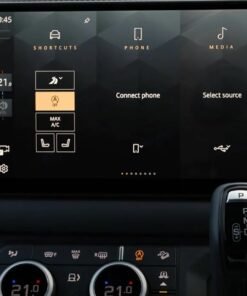
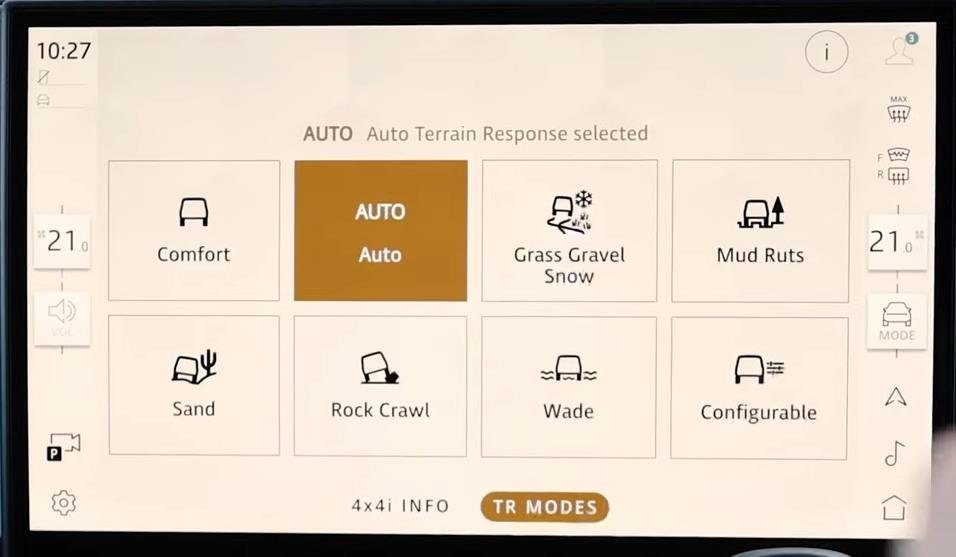
The JLR Advanced Off Road Capability is not a single component but an integrated system managed by the Terrain Response module. It builds upon the base Terrain Response system by adding or enhancing features such as All-Terrain Progress Control (ATPC) – an off-road cruise control – Active Rear Locking Differential, Configurable Terrain Response, and enhanced graphics on the Touch Pro Duo infotainment system. The system relies on a network of controllers, including the Transfer Box Control Module (TBCM), Anti-lock Braking System (ABS) module, and Powertrain Control Module (PCM), all receiving configuration data from the central CCF.
CCF Dependencies and Feature Flags
Activation of these advanced features is controlled by specific feature flags within the vehicle’s CCF. In practice, the CCF acts as a manifest—it informs each module which software functions are licensed and enabled for that specific VIN. Consider ATPC as an example: enabling it requires setting the “All Terrain Progress Control” parameter to “Enabled.” Furthermore, you must ensure the brake system and powertrain software are properly calibrated to support low-speed creep control. Importantly, an incorrect Wheelbase Code or Suspension Type definition can prevent these systems from initializing correctly—even when the physical hardware is present.
Hypothetical Process: Enabling Advanced Off Road Features via JET
Disclaimer: This is a generalized process for educational purposes. Always refer to the official JLR TOPIX for vehicle-specific procedures and software levels.
Step-by-Step CCF Editing Guide
- Pre-Programming Safety: Connect a certified battery maintainer to ensure a stable voltage above 12.5V. Connect a JLR-compatible DOIP VCI to the OBD-II port and establish a secure connection to the TOPIX cloud.
- Vehicle Session: Launch the JLR Engineering Tool (JET) and establish a session using the VIN. Perform a full vehicle configuration readout, downloading the current CCF from the Central Configuration Module (CCM).
- Configuration Editing: Navigate to the Terrain Response and Chassis systems within the JET tree structure. Key parameters to modify include:
- “Terrain Response Type” set to “Advanced” or “Configurable”.
- “All Terrain Progress Control” set to “Enabled”.
- “Rear Differential Type” set to “Active Locking” (if hardware is confirmed).
- Validation and Deployment: Validate the modified CCF for logical conflicts. Once cleared, upload the new configuration to the CCM. The vehicle will undergo a module reset cycle.
- Module Configuration/Calibration: Following the CCF update, use the standard diagnostic application in TOPIX to perform any necessary module configuration or calibration routines for the newly enabled features, such as the rear differential learn procedure.
- System Verification: Conduct a comprehensive functional test. Verify that all Terrain Response modes are selectable, that ATPC activates and maintains set speed, and that the instrument cluster displays the correct advanced off-road graphics.
Essential Tooling for Off-Road Capability Programming
This procedure demands professional-grade equipment. Inadequate tooling risks module corruption.
- DOIP VCI (Vehicle Communication Interface): A mandatory, JLR-approved DOIP VCI is required for reliable communication with modern JLR architectures. Generic OBD-II tools cannot handle the data throughput or security protocols.
- Stable Power Supply: A high-quality battery maintainer is non-negotiable. CCF writing is a critical process sensitive to voltage drops.
- Software Access: Active subscriptions to TOPIX cloud and authorized access to the JLR Engineering Tool (JET) are essential.
- Calibration Tools: Depending on the features enabled, specific calibration tools for suspension or differential units may be required post-programming.
For technicians performing an official OEM retrofit of the Advanced Off Road Capability package, sourcing the correct hardware kit is the first step. This includes switches, control modules, and any necessary wiring. A verified, all-in-one solution can be found here: JLR Advanced Off Road Capability Retrofit Kit.
Common Challenges and Expert Solutions
Challenge 1: “Feature Not Available” After Coding
Cause: The vehicle’s module software may not be at a high enough level to support the advanced feature. The CCF change enables the feature, but the module software must contain the logic to run it.
Solution: Before CCF editing, use JLR’s software management tools in TOPIX to check and update all relevant module software to the latest version.
Challenge 2: Terrain Response Modes Missing or Inoperative
Cause: An incorrect Wheelbase Code or Suspension Type defined in the CCF. The Terrain Response system tailors its strategies based on these vehicle attributes.
Solution: Meticulously verify the vehicle’s physical specifications against the data stored in the original CCF before making changes. Cross-reference with official VIN decoders.
Challenge 3: Communication Errors with TBCM or Differential Module
Cause: If enabling a hardware-dependent feature like a locking differential, the new CCF may attempt to communicate with a module that is not present or has a faulty connection.
Solution: Confirm the physical presence and operational status of all required hardware modules via a network scan before attempting CCF edits for a retrofit.
Frequently Asked Questions (FAQ)
What is the difference between standard Terrain Response and Advanced Off Road Capability?
Standard Terrain Response offers pre-set modes—for example, Grass/Gravel/Snow and Mud/Ruts. The Advanced Off Road Capability, also known as Terrain Response 2, typically adds two features. First, Configurable Terrain Response lets you fine-tune settings. Second, ATPC functions as an off-road cruise control. Moreover, this package often includes an Active Rear Locking Differential.
Can I add Advanced Off Road Capability to a Land Rover that didn’t come with it from the factory?
An OEM retrofit is possible but complex. It requires installing all necessary physical components (switches, differential, sensors) followed by extensive CCF editing and module configuration using the JET tool. Feasibility is highly VIN-specific and depends on the base vehicle’s pre-wiring and network architecture.
Why is a stable power supply so critical during CCF writing?
The CCF is the vehicle’s digital blueprint. Writing a new CCF is a high-intensity process for the vehicle’s modules. A voltage drop during this write cycle can corrupt the module’s memory, potentially “bricking” it and requiring expensive replacement and programming. A battery maintainer prevents this risk.
Conclusion
Configuring the JLR Advanced Off Road Capability is a task that underscores the critical role of software in defining a modern vehicle’s character. Success hinges on a meticulous process: accurate hardware verification, precise CCF editing with the JLR Engineering Tool, and thorough post-programming calibration. The procedure is unforgiving, demanding professional DOIP VCI tooling and an unwavering commitment to stable power throughout.
For technicians undertaking this advanced work, access to reliable tools, genuine OEM retrofit kits, and expert support is indispensable. For comprehensive solutions and support for complex JLR diagnostic programming and OEM retrofits, more information can be found at jlrupgrades.com.