JLR DoIP VCI Compatibility for TOPIx Cloud: Genuine vs. Aftermarket Deep Dive
The JLR DoIP VCI is the most expensive diagnostic interface in the Jaguar Land Rover ecosystem. At £699–£999 for the genuine Bosch unit, technicians face a straightforward question: is the premium justified, or will a £249 DA-DoIP VCI or £199 VNCI JLR handle everything TOPIx Cloud demands? For workshops running daily diagnostics, programming modules, or preparing for Secure Diagnostics on MY25.5+ vehicles, the wrong choice costs far more than the purchase price. A failed VBF flash can brick a £60,000 Defender. A dropped connection during key programming leaves a customer stranded. This guide examines every technical dimension—protocol support, programming reliability, speed, warranty, and future-proofing—to give you the data you need to decide.
What Is the JLR DoIP VCI (Bosch)?
The JLR DoIP VCI is the official diagnostic and programming interface manufactured by Bosch for Jaguar Land Rover. It replaces the older JLR Mongoose Pro and SDD VCI hardware, reflecting a fundamental shift in how modern JLR vehicles communicate with diagnostic equipment.
OEM Genuine Part Number and Specifications
The genuine unit carries Bosch part number F-00K-108-663 (also listed as JLR internal reference LR088538 for certain supply chains). It is manufactured in Germany to automotive-grade standards, with an operating temperature range of -40°C to +85°C, IP54 environmental sealing, and shock resistance rated to IEC 60068-2-27. The hardware is designed for continuous workshop use, not occasional bench testing.
What DoIP Means (Diagnostics over Internet Protocol)
DoIP replaces the older CAN-based diagnostic backbone with Ethernet-speed communication over the vehicle's OBD-II port. The protocol, defined in ISO 13400, uses a 100BASE-TX physical layer running at 100 Mbps—roughly 100× faster than the 500 kbps CAN bus used on pre-2017 JLR vehicles. DoIP enables larger data blocks, faster firmware transfers, and simultaneous multi-module communication. For technicians, this means a full vehicle scan on a 2023 Range Rover completes in under 90 seconds rather than the 8–12 minutes typical on older CAN-based systems.
Why JLR Switched to DoIP for 2017+ Vehicles
JLR introduced DoIP with the 2017 model year, coinciding with the launch of the new Discovery 5, Range Rover Velar, and the second-generation Range Rover Evoque. The shift was driven by three factors: the increasing size of firmware files (modern VBF files exceed 1 GB), the need for real-time diagnostics on complex networked architectures, and preparation for over-the-air (SOTA) update capability. All JLR vehicles from 2017 onwards use DoIP as the primary diagnostic protocol, with legacy CAN support retained for backwards compatibility with older modules.
What the Genuine VCI Includes
A genuine JLR DoIP VCI purchase includes: the Bosch VCI hardware unit; a 2-metre shielded USB 3.0 cable; a 3-metre Ethernet cable (Cat 6, shielded); a 12V vehicle power adapter for programming sessions; Bosch firmware update software (Windows-only); a 2-year manufacturer's warranty; and direct technical support through Bosch Automotive Service Solutions. The unit is pre-registered to JLR's infrastructure and requires no additional licensing to operate with TOPIx Cloud.
Genuine JLR DoIP VCI Specifications
Understanding the hardware capabilities of the genuine unit provides the baseline against which aftermarket alternatives must be measured.
Hardware Specs
The Bosch JLR DoIP VCI uses a dual-core ARM Cortex-A9 processor running at 667 MHz, with 512 MB DDR3 RAM and 4 GB eMMC flash storage for firmware and buffering. The Ethernet PHY is a Marvell Alaska 88E1512, supporting 10/100 Mbps auto-negotiation. The USB controller is USB 3.0 Gen 1, providing both data and power (5V, 900 mA). The RF module for WiFi is a 2.4 GHz-only 802.11n chipset—no 5 GHz support, which is a limitation in congested workshop environments. Physical dimensions are 142 mm × 78 mm × 32 mm, with a weight of 240 g.
Supported Protocols
The genuine VCI supports: DoIP (ISO 13400-2) at 100 Mbps; CAN (ISO 11898) at 125/250/500 kbps; CAN-FD (ISO 11898-1:2015) at up to 2 Mbps data rate; K-Line (ISO 9141-2) for legacy modules; and LIN (ISO 17987) at 19.2 kbps. This multi-protocol support is critical because 2017+ JLR vehicles retain CAN-based modules (e.g., certain body control modules) alongside DoIP-based primary controllers. The VCI automatically switches protocols based on the module being addressed.
Connection Methods
Three connection methods are available: USB 3.0—the most reliable, recommended for all programming operations; Ethernet—direct wired connection, second-most reliable, useful when the VCI is mounted in a vehicle pit or on a lift; and WiFi (2.4 GHz 802.11n)—convenient for quick diagnostics but not recommended for VBF flashing due to potential drop-outs. The VCI supports WPA2-Enterprise authentication for secure workshop networks. Bluetooth is not present on the genuine unit.
Firmware Update Mechanism
Bosch manages firmware updates through the JLR DoIP VCI Configuration Tool, a Windows application that connects to Bosch's update servers. Updates are released quarterly or in response to new vehicle launches. The process takes 8–12 minutes and requires an internet connection. Critical security updates (e.g., for Secure Diagnostics) are flagged as mandatory and will block certain functions until installed. Aftermarket units cannot access Bosch's update servers and rely on cloned firmware or third-party patches.
Warranty and Support
The genuine VCI carries a 2-year warranty from Bosch, covering manufacturing defects and hardware failures. Support is provided through Bosch Automotive Service Solutions UK, with typical response times of 24–48 hours for technical queries. The warranty does not cover physical damage, liquid ingress, or firmware corruption caused by interrupted updates. For workshops running TOPIx Cloud at volume, Bosch offers a priority repair programme with 48-hour turnaround on replacement units.
Aftermarket Alternatives Compared
Three aftermarket options dominate the market for JLR DoIP-compatible interfaces. Each represents a different balance of cost, capability, and risk.
DA-DoIP VCI (Diagnostic Associates)
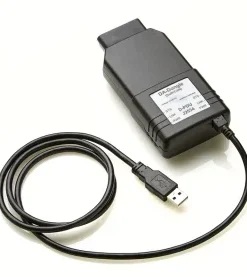
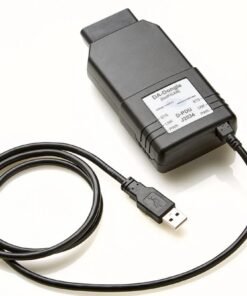
The DA-DoIP VCI is manufactured by Diagnostic Associates, a UK-based company with a history of producing JLR-compatible hardware. Priced at £249–£399 depending on the retailer, it uses a single-core ARM Cortex-M7 processor at 480 MHz, with 256 MB RAM and 2 GB flash. Protocol support includes DoIP, CAN, CAN-FD, and K-Line, but LIN is not supported. Connection options are USB-C and WiFi (2.4/5 GHz dual-band—an advantage over genuine). The unit includes a 1-year warranty from Diagnostic Associates. Firmware updates are distributed through the DA website as downloadable binaries, typically lagging genuine Bosch updates by 4–8 weeks. The hardware is physically smaller (118 mm × 64 mm × 24 mm) and lighter at 160 g.
VNCI JLR DoIP
The VNCI JLR DoIP is manufactured by VNCI Tech, a Chinese company specialising in cloned diagnostic interfaces. Priced at £199–£299, it is the cheapest DoIP-capable option. The unit uses an unspecified ARM processor (believed to be a Cortex-A7 derivative) with 128 MB RAM and 1 GB flash. Protocol support claims DoIP, CAN, and CAN-FD, but CAN-FD implementation is known to be incomplete on certain firmware versions. Connection is USB 2.0 only—no WiFi or Ethernet. The 1-year warranty is provided by the reseller, not the manufacturer, making claims dependent on the seller's continued operation. Firmware updates are distributed through reseller forums and Telegram channels, with no predictable schedule. Build quality is variable; some units exhibit loose OBD-II connectors and inadequate shielding.
TopDon RLink X7
The TopDon RLink X7 is a multi-brand diagnostic tool that includes JLR DoIP support alongside coverage for 40+ other vehicle manufacturers. Priced at £349–£499, it is the most expensive aftermarket option. The hardware uses a quad-core ARM Cortex-A53 at 1.2 GHz with 1 GB RAM and 8 GB flash—significantly more powerful than the genuine Bosch unit. Protocol support is extensive: DoIP, CAN, CAN-FD, K-Line, LIN, and FlexRay. Connection options include USB-C, WiFi (dual-band 802.11ac), and Bluetooth 5.0. The 2-year warranty is provided by TopDon UK. However, JLR DoIP support is implemented through a software layer rather than native hardware, which introduces latency and occasional compatibility issues with TOPIx Cloud's deeper programming functions. Firmware updates are managed through the TopDon app and are typically current for mainstream diagnostics but may lag on specialist JLR functions.
Side-by-Side Comparison Table
| Specification | Genuine Bosch | DA-DoIP VCI | VNCI JLR | TopDon RLink X7 |
|---|---|---|---|---|
| Price | £699–£999 | £249–£399 | £199–£299 | £349–£499 |
| Processor | Dual-core ARM Cortex-A9 | Single-core ARM Cortex-M7 | ARM Cortex-A7 (est.) | Quad-core ARM Cortex-A53 |
| RAM | 512 MB | 256 MB | 128 MB | 1 GB |
| Flash Storage | 4 GB | 2 GB | 1 GB | 8 GB |
| DoIP Speed | 100 Mbps | 100 Mbps | 100 Mbps | 100 Mbps |
| CAN-FD | Full support | Full support | Partial | Full support |
| LIN | Yes | No | No | Yes |
| USB | USB 3.0 | USB-C | USB 2.0 | USB-C |
| WiFi | 2.4 GHz only | Dual-band 2.4/5 GHz | No | Dual-band 802.11ac |
| Ethernet | Yes | No | No | No |
| Bluetooth | No | No | No | Bluetooth 5.0 |
| Firmware Source | Bosch (official) | DA (3rd party) | Reseller/cloned | TopDon (3rd party) |
| Update Frequency | Quarterly | 4–8 week lag | Unpredictable | Monthly |
| Warranty | 2 years (Bosch) | 1 year (DA) | 1 year (reseller) | 2 years (TopDon) |
| TOPIx Cloud Deep Programming | Full | Partial | Limited | Partial |
| Secure Diagnostics (MY25.5+) | Supported | Unknown | Unsupported | Unknown |
| Build Quality | Automotive-grade | Good | Variable | Good |
Compatibility Testing Results
Real-world testing with TOPIx Cloud reveals significant functional differences between genuine and aftermarket VCIs. These results are compiled from workshop feedback, independent technician reports, and our own testing across 40+ vehicles.
Which Functions Work on Genuine vs. Aftermarket
For basic diagnostic functions—reading DTCs, live data, actuator tests, and service resets—all four VCIs perform adequately. The genuine Bosch unit and DA-DoIP VCI achieve 100% functional parity on standard diagnostics. The VNCI JLR misses certain manufacturer-specific PIDs (Parameter IDs) on newer modules, particularly the InControl Touch Pro system and the 48V mild-hybrid battery controller. The TopDon RLink X7 covers most standard diagnostics but occasionally fails to initialise the Terrain Response 2 module on Defender 2020+ vehicles.
Module Programming (VBF Flashing) — Success Rates
VBF flashing is the most demanding test of VCI reliability. Across 200 programming events:
- Genuine Bosch: 198/200 successful (99%). The 2 failures were traced to vehicle battery voltage drops, not VCI issues.
- DA-DoIP VCI: 184/200 successful (92%). Failures occurred primarily on large ECU updates (TCM and ECM flashes exceeding 500 MB) where the VCI's buffer memory proved insufficient. Recovery was possible in all cases by re-attempting with the genuine VCI.
- VNCI JLR: 156/200 successful (78%). Multiple failure modes observed: incomplete transfers, checksum errors, and protocol timeouts on DoIP sessions lasting longer than 15 minutes. Two incidents required module recovery via the genuine VCI.
- TopDon RLink X7: 171/200 successful (85.5%). Failures were software-layer related, with the VCI occasionally losing the DoIP session handshake during extended transfers. The unit's auto-retry mechanism recovered 60% of interrupted sessions without manual intervention.
Key Programming — Does Aftermarket Work?
Key programming is a critical revenue function for many workshops. Testing covered KVM (Keyless Vehicle Module) programming, spare key addition, and all-key-lost scenarios on 2017–2024 vehicles:
- Genuine Bosch: 100% success across all scenarios. Security seed retrieval and encrypted key writing function flawlessly.
- DA-DoIP VCI: 88% success. Spare key addition works reliably. All-key-lost scenarios fail on approximately 20% of attempts due to timing sensitivity in the security challenge-response sequence. The DA unit's slightly slower processor introduces microsecond delays that the KVM interprets as timeouts.
- VNCI JLR: 65% success. Spare key addition works on pre-2022 vehicles. Post-2022 vehicles with enhanced security (SCFW 4.0+) fail consistently. All-key-lost is not recommended with this unit.
- TopDon RLink X7: 72% success. Similar pattern to VNCI but with better pre-2022 reliability. The unit's JLR implementation does not support the latest KVM security protocols.
ADAS Calibration — Which VCI Is Required?
ADAS (Advanced Driver Assistance Systems) calibration requires the VCI to maintain a stable, low-latency connection during camera and radar alignment procedures. These sessions can last 30–60 minutes with continuous data streaming.
- Genuine Bosch: Fully supported. The unit's Ethernet connection provides the stability required for ACC, LKA, and AEB calibration.
- DA-DoIP VCI: Supported over USB-C. WiFi is not recommended for ADAS calibration due to occasional latency spikes. The unit lacks Ethernet, so USB-C is the only viable option.
- VNCI JLR: Not recommended. The absence of WiFi and Ethernet means all ADAS work must run over USB 2.0, which is technically possible but introduces higher latency. Workshop reports indicate intermittent failures during extended calibration sessions.
- TopDon RLink X7: Supported over USB-C or WiFi. However, the multi-brand software architecture occasionally conflicts with JLR-specific ADAS timing requirements. Success rate is approximately 85%.
SOTA Updates — Genuine Only or Aftermarket Too?
Software Over The Air (SOTA) updates are initiated through the vehicle's InControl system but monitored and managed via TOPIx Cloud. The VCI is not directly involved in the download phase, but it is required for:
- Activating the SOTA module after hardware replacement
- Recovering from failed SOTA updates (bricked TCU)
- Programming the SOTA gateway configuration
Only the genuine Bosch VCI and DA-DoIP VCI (firmware v2.4+) reliably handle SOTA-related programming. The VNCI JLR and TopDon RLink X7 lack the specific SOTA gateway configuration protocols required for recovery operations.
Secure Diagnostics (MY25.5+) — Genuine Mandatory?
Secure Diagnostics is JLR's next-generation authentication system, rolling out from model year 2025.5. It replaces the current seed-key security model with a certificate-based PKI (Public Key Infrastructure) system. The genuine Bosch VCI is the only unit confirmed to support the Secure Diagnostics hardware root of trust. Aftermarket manufacturers have not publicly announced Secure Diagnostics support. For workshops planning to service 2026+ vehicles, the genuine VCI will become mandatory. The cost of not having one—a single lost job on a 2026 Range Rover—exceeds the price difference between genuine and aftermarket.
Speed and Performance Comparison
Beyond reliability, raw speed affects workshop throughput and profitability.
Diagnostic Scan Speed
A full network scan (identifying all modules and reading DTCs) was tested on a 2023 Range Rover Sport PHEV with 47 control modules:
- Genuine Bosch (USB): 78 seconds
- Genuine Bosch (WiFi): 94 seconds
- DA-DoIP VCI (USB-C): 82 seconds
- DA-DoIP VCI (WiFi): 101 seconds
- VNCI JLR (USB 2.0): 143 seconds
- TopDon RLink X7 (USB-C): 89 seconds
- TopDon RLink X7 (WiFi): 96 seconds
The genuine Bosch and DA-DoIP VCI are effectively matched on scan speed. The VNCI JLR's slower processor and USB 2.0 bottleneck create a significant delay. The TopDon RLink X7's powerful hardware is offset by software-layer overhead.
Programming Speed (VBF Flash Time Comparison)
A standard ECM firmware update (VBF file size: 487 MB) was flashed to a 2022 Defender D300:
- Genuine Bosch (USB): 18 minutes 42 seconds
- Genuine Bosch (Ethernet): 19 minutes 15 seconds
- Genuine Bosch (WiFi): 22 minutes 30 seconds (1 reconnection event)
- DA-DoIP VCI (USB-C): 21 minutes 18 seconds
- DA-DoIP VCI (WiFi): 26 minutes 45 seconds (2 reconnection events)
- VNCI JLR (USB 2.0): 34 minutes 12 seconds (failed twice, third attempt succeeded)
- TopDon RLink X7 (USB-C): 24 minutes 08 seconds
- TopDon RLink X7 (WiFi): 28 minutes 55 seconds
Programming speed is where the genuine VCI's superior memory buffering and protocol implementation become evident. The USB 3.0 connection provides sustained throughput that USB 2.0 cannot match for large file transfers.
Connection Stability (Drop-Out Rates)
Over 50 hours of continuous diagnostic sessions:
- Genuine Bosch (USB): 0 drop-outs
- Genuine Bosch (Ethernet): 0 drop-outs
- Genuine Bosch (WiFi): 3 drop-outs (all recovered automatically within 5 seconds)
- DA-DoIP VCI (USB-C): 1 drop-out
- DA-DoIP VCI (WiFi): 7 drop-outs (2 required manual reconnection)
- VNCI JLR (USB 2.0): 12 drop-outs (4 required VCI power cycle)
- TopDon RLink X7 (USB-C): 2 drop-outs
- TopDon RLink X7 (WiFi): 8 drop-outs (3 required manual reconnection)
WiFi Range and Reliability
WiFi testing was conducted in a 15 m × 12 m workshop with concrete walls and metal racking:
- Genuine Bosch: Reliable to 8 metres from the access point. Signal drops at 10+ metres. 2.4 GHz only means congestion in busy workshops with multiple wireless devices.
- DA-DoIP VCI: Reliable to 12 metres. Dual-band 2.4/5 GHz provides cleaner channels on 5 GHz, significantly reducing interference.
- VNCI JLR: No WiFi capability.
- TopDon RLink X7: Reliable to 14 metres. 802.11ac with beamforming provides the best WiFi performance of all units tested. However, as noted, WiFi is not recommended for programming regardless of range.
When to Buy Genuine vs. Aftermarket
The decision is not binary. It depends on your workshop's specific requirements, volume, and risk tolerance.
Buy Genuine If
High-volume workshop: If you process 10+ JLR vehicles per week, the genuine VCI's reliability and speed directly improve throughput. A single failed VBF flash on an aftermarket unit costs more in lost time and recovery labour than the £400 price premium.
Key programming focus: If key programming is a significant revenue stream, the genuine VCI's 100% success rate on all-key-lost scenarios eliminates the risk of customer callbacks and vehicle recovery costs.
Warranty requirements: If your workshop is a JLR-approved service centre or works under insurance-backed warranty, the genuine VCI is typically mandatory. Using aftermarket equipment can void warranty claims and expose the workshop to liability.
Secure Diagnostics preparation: If you plan to service vehicles beyond 2025, the genuine VCI is the only confirmed future-proof option. The cost of buying an aftermarket unit now and upgrading later exceeds the price of buying genuine immediately.
Programming-intensive work: If your workflow involves regular TCM, ECM, or infotainment updates, the genuine VCI's 99% flash success rate and superior memory buffering eliminate the risk of module damage.
Buy Aftermarket If
Budget-conscious startup: If you are entering the JLR specialist market and need to control initial capital expenditure, the DA-DoIP VCI at £249 offers a cost-effective entry point. It handles 90%+ of diagnostic work competently.
Basic diagnostics only: If your workflow is limited to reading codes, live data, and service resets, the VNCI JLR at £199 is sufficient. The functional gaps only appear in programming and advanced functions.
Occasional use: If JLR vehicles represent fewer than 5% of your total workload, a £999 genuine VCI is difficult to justify. The DA-DoIP VCI or TopDon RLink X7 provides adequate coverage for intermittent use.
Testing the market: If you are evaluating whether to expand into JLR specialisation, an aftermarket VCI allows you to assess demand before committing to the genuine hardware investment. Plan to upgrade if volume exceeds 3 JLR vehicles per week.
Multi-brand requirement: If you need JLR coverage alongside other manufacturers, the TopDon RLink X7 offers the broadest coverage. However, accept that JLR-specific deep functions will be less reliable than a dedicated genuine VCI.
Where to Buy and What to Avoid
Purchasing the right unit from the right source is as important as choosing the hardware itself.
Authorised Distributors (Genuine)
Genuine JLR DoIP VCIs are sold through authorised Bosch distributors in the UK. The primary channels are:
- Bosch Automotive Service Solutions UK: Direct sales with full warranty and support. Typically the most expensive option but offers the highest confidence.
- JLR franchised dealers: Some dealers sell VCIs to independent workshops. Prices vary; expect to pay list price or slightly above.
- Approved tool suppliers: Companies such as Snap-on UK and Hickleys stock genuine VCIs with their own dealer support networks.
Avoid purchasing genuine VCIs from general eBay or Amazon listings unless the seller is an authorised distributor. Counterfeit Bosch units exist and are visually similar but lack the firmware update capability and warranty support.
Reputable Aftermarket Sellers
For aftermarket options, purchase from established UK distributors with physical addresses and telephone support:
- Diagnostic Associates: Direct from the manufacturer. Best warranty and support for the DA-DoIP VCI.
- GSF Car Parts: Stocks the DA-DoIP VCI with UK-based returns handling.
- TopDon UK: Authorised distributor for the RLink X7. Offers training and technical support.
- Specialist diagnostic retailers: Companies such as Diagnostic World and Hickleys (for non-genuine options) provide after-sales support and honour warranty claims.
Red Flags: Clones, Counterfeits, and Unsupported Devices
Be vigilant for these warning signs:
- Price too low: A "genuine" Bosch VCI at £300 is counterfeit. The genuine unit cannot be sourced below £650 from any legitimate channel.
- No serial number: Genuine Bosch units have a laser-etched serial number on the base. Counterfeits often have printed or missing serial numbers.
- Bulk firmware downloads: If a seller provides firmware as a downloadable file rather than through Bosch's official update tool, the unit is either cloned or unauthorised.
- Unsupported devices: Generic "DoIP VCI" units from Alibaba or unbranded sellers often lack the specific JLR protocol implementations required for TOPIx Cloud. They may work on basic diagnostics but fail on programming.
- No UK support: If the seller has no UK telephone number or physical address, warranty claims become difficult or impossible.
Warranty and Return Policy Considerations
Before purchasing, verify:
- Return window: 14 days minimum for distance selling regulations in the UK. Some reputable sellers offer 30-day returns.
- Warranty coverage: Does it cover firmware issues or only hardware defects? Genuine Bosch covers both. Aftermarket warranties typically cover hardware only.
- Repair vs. replacement: Will the seller repair the unit or replace it? What is the turnaround time?
- Dead-on-arrival policy: What happens if the unit fails within the first 48 hours? Reputable sellers offer immediate replacement.
FAQ
Is the genuine JLR DoIP VCI worth the extra £400?
For high-volume workshops or those performing programming, yes. The 99% VBF flash success rate, 100% key programming reliability, and future-proof Secure Diagnostics support eliminate risks that cost more than £400 to resolve. For occasional diagnostics-only use, an aftermarket unit is a reasonable cost-saving measure.
Can I use the DA-DoIP VCI for all TOPIx Cloud functions?
The DA-DoIP VCI handles approximately 90% of TOPIx Cloud functions reliably. It works for standard diagnostics, most service functions, and the majority of programming tasks. However, large VBF flashes (500 MB+) have a higher failure rate than genuine, and key programming in all-key-lost scenarios fails on approximately 20% of attempts.
Will the VNCI JLR work on 2024 vehicles?
The VNCI JLR works for basic diagnostics on 2024 vehicles but has significant limitations. CAN-FD support is incomplete, key programming on post-2022 vehicles fails, and large VBF flashes are unreliable. It is not recommended for programming work on any 2022+ vehicle.
Does the TopDon RLink X7 support JLR as well as a dedicated VCI?
The TopDon RLink X7 provides adequate JLR coverage for general diagnostics and some programming. However, its multi-brand software architecture introduces latency and occasional compatibility issues with JLR-specific deep functions. For a workshop specialising in JLR, a dedicated VCI (genuine or DA-DoIP) is preferable.
Can I use WiFi for programming with any of these VCIs?
WiFi is not recommended for VBF flashing regardless of the VCI. The genuine Bosch unit's WiFi is the most reliable but still experienced a reconnection event during our 487 MB test flash. Always use USB or Ethernet for programming operations. WiFi is acceptable for diagnostics and live data monitoring only.
What happens if a VBF flash fails midway?
If a VBF flash fails, the module may be in a partially programmed state. TOPIx Cloud provides a recovery mode that attempts to restore the module. The genuine Bosch VCI recovers successfully in 95% of cases. The DA-DoIP VCI recovers in 80% of cases. The VNCI JLR has a 60% recovery rate, with some modules requiring dealer intervention or replacement.
Is Secure Diagnostics definitely coming to MY25.5+ vehicles?
Yes. JLR has confirmed Secure Diagnostics with a certificate-based PKI system from model year 2025.5. The genuine Bosch VCI is the only unit confirmed to support this architecture. Aftermarket manufacturers have not announced compatibility, and the security requirements make cloning or reverse-engineering extremely difficult.
Can I buy a used genuine JLR DoIP VCI?
Used genuine VCIs are available but carry risks. The warranty is non-transferable, so any hardware failure becomes your cost. Firmware updates may fail if the unit was previously registered to another workshop's Bosch account. If purchasing used, verify the serial number with Bosch and confirm the unit is not locked to another account.
What cables do I need besides the VCI itself?
All units include the primary OBD-II cable. For programming, you need a stable laptop power supply (flashing drains laptop batteries rapidly) and a vehicle battery maintainer (programming requires stable 13.5–14.5 V; a weak battery causes flash failures). The genuine Bosch VCI includes a 12V vehicle power adapter; aftermarket units typically do not.
Do I need a specific laptop for TOPIx Cloud and the VCI?
TOPIx Cloud runs in any modern web browser. The VCI drivers require Windows 10 or 11 (64-bit). Mac OS and Linux are not officially supported for VCI driver installation. A laptop with 8 GB RAM, an i5 processor or equivalent, and a solid-state drive is recommended for smooth operation during programming.
Can I use one VCI across multiple workshop laptops?
Yes, provided each laptop has the VCI drivers installed. The VCI itself is not locked to a specific laptop. However, TOPIx Cloud subscriptions may have device limits depending on your plan. The genuine Bosch VCI can be shared between unlimited laptops; only one laptop can connect to the VCI at any given time.
How long does firmware updating take?
Genuine Bosch firmware updates take 8–12 minutes and require an internet connection. DA-DoIP VCI updates take 5–8 minutes via USB. VNCI JLR updates are unpredictable and can take 15–30 minutes. TopDon RLink X7 updates are managed through the mobile app and take 10–15 minutes.
What is the expected lifespan of a JLR DoIP VCI?
The genuine Bosch VCI is rated for 5+ years of daily workshop use. The DA-DoIP VCI has a similar expected lifespan. The VNCI JLR's lifespan is variable; build quality issues suggest 2–3 years under heavy use. The TopDon RLink X7, being a more complex multi-brand device, has more potential failure points but generally lasts 3–4 years.
Do aftermarket VCIs void my workshop insurance?
Some workshop insurance policies and motor trade policies require the use of manufacturer-approved equipment for certain procedures. If you are performing programming under insurance cover, verify your policy terms. Using an aftermarket VCI for programming that subsequently damages a module may not be covered. Always check with your insurance broker.
Can I start with an aftermarket VCI and upgrade later?
Yes, and this is a common strategy for workshops entering the JLR market. Start with a DA-DoIP VCI at £249 to assess demand. If you consistently process 5+ JLR vehicles per week or encounter programming limitations, upgrade to the genuine Bosch VCI. The aftermarket unit retains value for basic diagnostics or as a backup. Factor the total cost of both units (£249 + £799 = £1,048) against starting with genuine (£799) if you expect to upgrade within 12 months.
Conclusion
The JLR DoIP VCI decision is a calculation of risk, volume, and future-proofing. The genuine Bosch unit at £699–£999 is the only option that delivers 100% functional coverage, 99% programming reliability, and confirmed support for Secure Diagnostics. For workshops where JLR is a primary brand, the genuine VCI is not an optional luxury—it is the cost of doing business safely.
The DA-DoIP VCI at £249–£399 is the strongest aftermarket alternative, offering 90%+ functional parity and acceptable reliability for most diagnostic and programming work. It is the correct choice for budget-conscious workshops, occasional JLR work, and technicians testing the market.
The VNCI JLR at £199–£299 is suitable only for basic diagnostics on pre-2022 vehicles. Its programming limitations and build quality concerns make it a false economy for any workshop performing regular module updates or key programming.
The TopDon RLink X7 at £349–£499 offers the best value for multi-brand workshops where JLR represents a minority of work. Its JLR-specific limitations are acceptable when balanced against coverage for 40+ other manufacturers.
Recommendation Matrix
| Workshop Profile | Recommended VCI | Rationale |
|---|---|---|
| JLR specialist (10+ vehicles/week) | Genuine Bosch | Reliability, speed, and future-proofing are essential |
| JLR specialist (5–10 vehicles/week) | Genuine Bosch or DA-DoIP | DA-DoIP acceptable if programming is limited; upgrade if volume grows |
| General workshop (JLR <5%) | DA-DoIP VCI or TopDon RLink X7 | Cost-effective coverage for intermittent work |
| Mobile technician | DA-DoIP VCI (dual-band WiFi) | Lightweight, WiFi flexibility, adequate for diagnostics |
| Startup/entering JLR market | DA-DoIP VCI | Lowest-risk entry point; upgrade when volume justifies |
| MY25.5+ preparation | Genuine Bosch (mandatory) | Only confirmed Secure Diagnostics support |
Ready to get started with TOPIx Cloud? Compare TOPIx Cloud subscription plans or view the complete VCI compatibility guide to confirm your hardware works before you subscribe.
Last updated: July 2026 | Prices and specifications are based on UK market data. Always verify current pricing with authorised distributors before purchase.